Choose a pilot or a deeper collaboration lab.
Team building & alignment workshops
Team workshops that change what happens in the next meeting.
A practical, participatory session for teams that need to listen, collaborate and adapt. I can facilitate it in person or online, or help you design a workshop for your own office.
Larger groups use an event-session structure.
Indicative Munich price, before VAT if applicable.
Italian available; German by agreement.
The business need
Team building is useful when it changes a behaviour—not only the mood.
A team can enjoy an afternoon together and return to exactly the same meeting habits. One person still solves before listening. Specialists still protect complete answers. A handover still loses the information that another function needs.
Applied improvisation gives the group a low-risk way to experience those patterns rather than merely discuss them. A simple rule makes listening, ownership, status or adaptability visible. We pause, describe what happened and connect the observation to the team's actual work.
I design the session around one recurring situation you recognise. The activities are playful, but the debrief stays grounded in meetings, decisions, handovers and change.
The aim is not to turn colleagues into performers. It is to give them a practice room for collaboration.
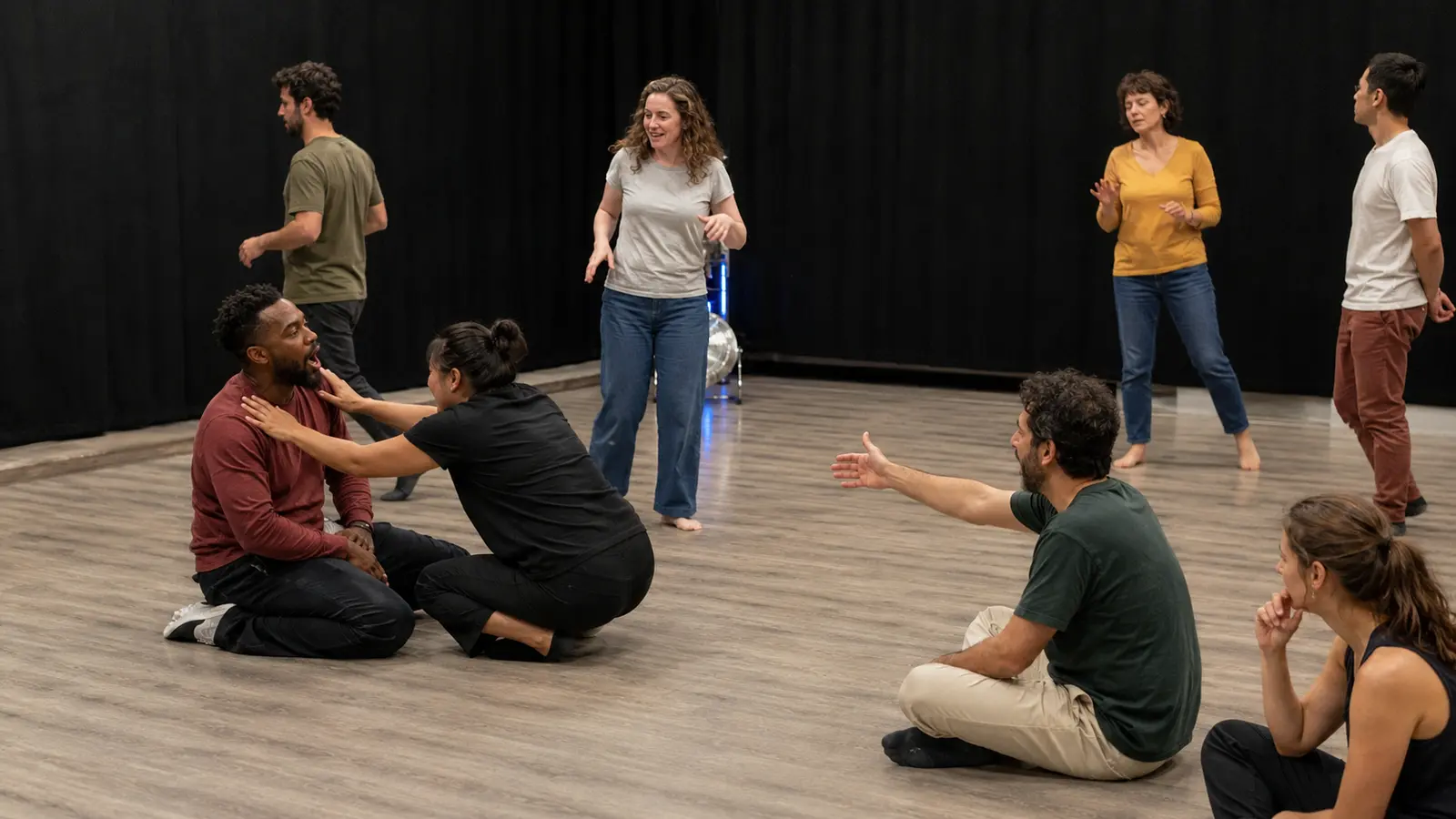
See the interaction, not only the intention.Several offers and responses make coordination visible enough for a team to examine together.
What participants can practise
Observable behaviours, not abstract promises.
Listen before solving
Notice the complete concern and the offer underneath it before preparing the response.
Build rather than compete
Develop another person's unfinished contribution without losing critical judgement.
Surface assumptions earlier
Make different functional perspectives usable before they become late dependencies.
Respond when reality changes
Release an outdated choice, preserve the objective and make the next workable move.
How it is designed
From your context to useful practice.
The content is tailored, but the design logic remains clear.
- 01
Name the recurring pattern
A short design call identifies what keeps happening, who will be present and what a useful shift would look like.
- 02
Build a safe progression
The session starts accessibly and increases challenge gradually. No theatre experience is expected.
- 03
Practise under light pressure
Clear constraints make habitual responses visible without using a live conflict as workshop material.
- 04
Transfer one behaviour
The group finishes with a concrete practice it can test in the next real meeting or handover.
Where it fits
Useful starting points.
- Cross-functional teams that use the same words but carry different assumptions
- Product, technology, finance or operational groups with difficult handovers
- Teams entering a change, migration or new phase of collaboration
- Leadership cohorts practising presence, status awareness and responsiveness
Responsible boundaries
What I will not oversell.
- No participant is required to perform alone, be funny or disclose a personal conflict.
- The workshop does not disguise performance management or conflict mediation as play.
- A collaboration exercise cannot replace a missing decision, process, resource or governance fix.
- The pace, physical activity and level of exposure are adapted to the people in the room.
Practical questions
Before you put it in the programme.
Format, group size and context matter. These answers provide a starting point.
Is this a team-building activity or a learning workshop?
It can be enjoyable and connecting, but every exercise has a learning intention and a structured debrief. The goal is a behaviour the team can recognise and reuse.
Will sceptical or analytical participants engage?
I explain the purpose, keep the first activities simple and connect observations to real work. My own background in technology, billing and transformation helps me work credibly with people who want to know why an exercise matters.
Can the workshop use our current team challenge?
Yes, as design context. I normally keep exercise prompts fictional or low-risk so participants can examine behaviour without defending a live position.
Can you help if our office is outside Europe?
Yes. I can facilitate online or help you design a workshop that your local facilitator can deliver.
Start with the situation
What should people do differently after the session?
Tell me about the audience, the recurring pattern and the time available. I will suggest a suitable design—or tell you if this is not the right format.